
About / Why Organic
Why organic
Organic is the farming system the company is built on, not a label applied at the end. What follows is what that actually controls, and what it puts in your incoming goods file.
- Restricted inputs, by regulationSynthetic pesticides and synthetic nitrogen fertilizers are not permitted. Only inputs on the positive lists of the applicable organic regulation may be used, and every input is declared to the control body.
- Land history before the first certified harvestGround must be farmed to organic rules through a conversion period before its crop can be sold as organic. Certification covers the land, not just the season.
- An annual inspection cycleThe certifier inspects the farms and the facility at least once a year, announced or unannounced, and takes samples at its own discretion. Certificates carry an issue date, an expiry date and a defined product scope.
- Residue testing on top of the standardOrganic status is a system guarantee, not a test result, so lots are also analysed for pesticide residues, heavy metals and aflatoxins at QCAP, and for the in-house microbiological panel before release.
- Separation from conventional goodsOrganic and non-organic material is received, stored, processed and packed under separated flows, with cleaning between runs, so that identity is preserved through the plant.
- Mass balance that has to reconcileThe certifier checks that the organic volume sold reconciles against the organic volume harvested and received. Selling more than the land can produce is what audits are designed to catch.
- Traceability to the lotEvery shipment is lot marked, and the lot ties back through packing, milling and cleaning records to the field and season it came from.
- No GMO materialGenetically modified seed and material are excluded by the organic regulations that apply to the crops supplied here.
- Documentation your market will ask forThe organic certificate matching the destination programme travels with the goods, alongside the certificate of analysis and the phytosanitary certificate.
- One operator across the chainGrowing, processing and export sit under a single certified operator, so there is no uncertified gap between the field and the container where identity could be lost.
Standards and references
- Regulation (EU) 2018/848 and its implementing acts
- USDA National Organic Program, 7 CFR Part 205
- Japanese Agricultural Standard for organic plants
- CERES GmbH, the certifying body for this operation
- QCAP, Central Laboratory of Residue Analysis of Pesticides and Heavy Metals in Food
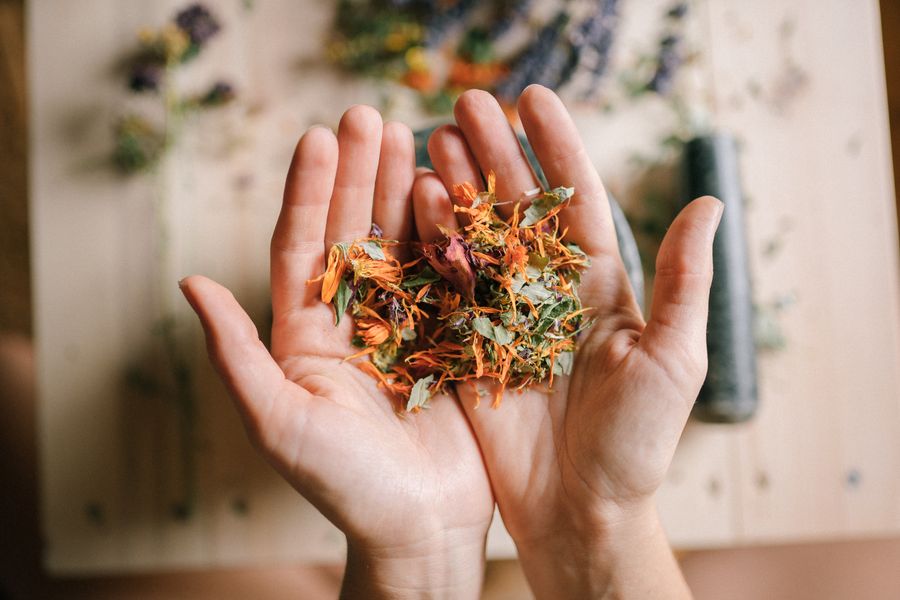
Dried herbs in hand after processing.
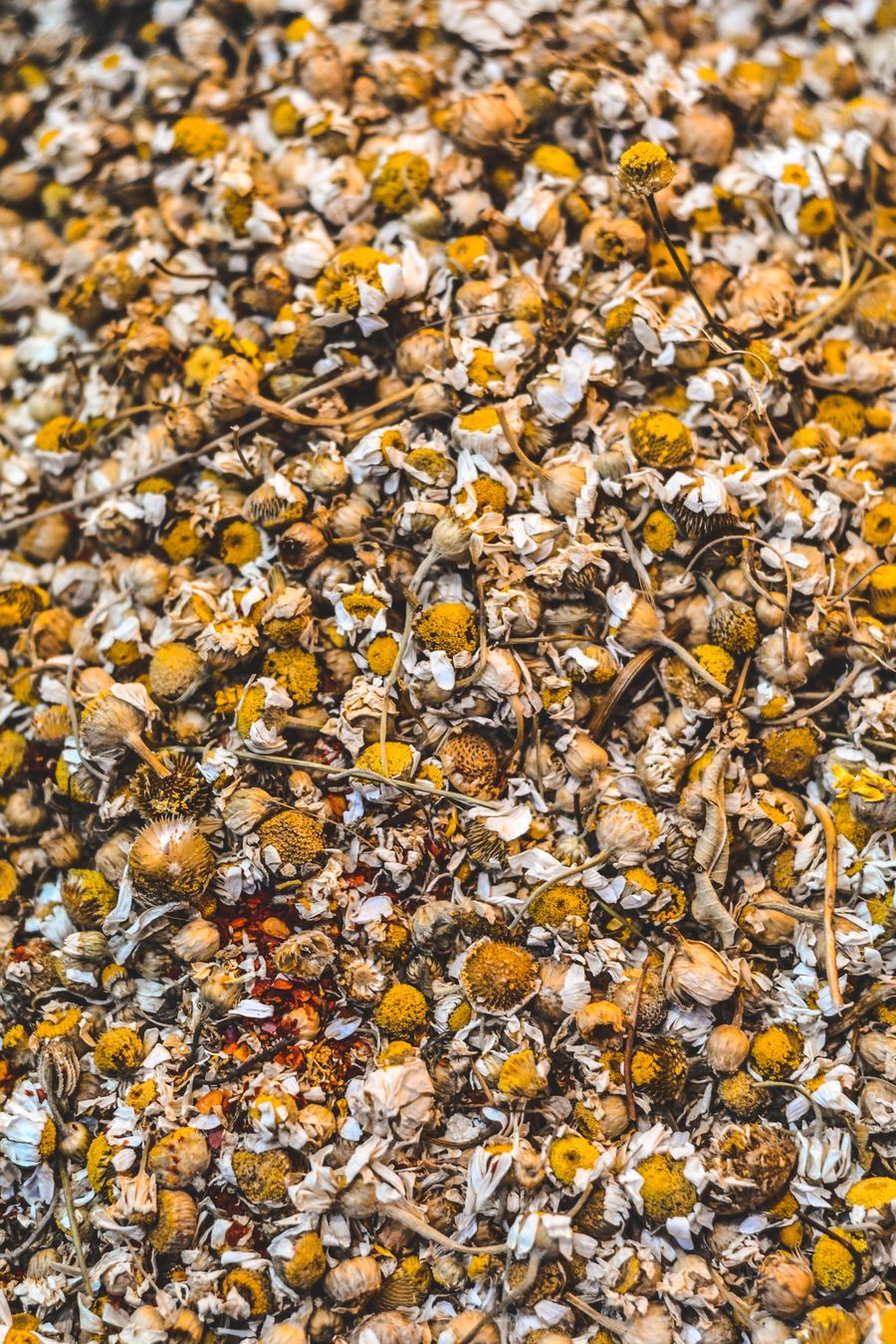
Dried chamomile flowers, one of the flower herbs grown under the organic program.
What this means for buyers
Organic here is an audited system with documents attached, not a claim. The programmes and the inspection regime are listed on the farm page, the certificates and their verification links are on the certificates page, and the test panel is on the manufacturing page.